
TQS Three Element B
Teachers plan and deliver effective instruction and create an environment that facilitates learning for their students.
Teachers use formal and informal methods to assess student learning, provide feedback, and use results to inform planning and instruction.
Artist-Inspired: 2D to 3D Cardboard Relief
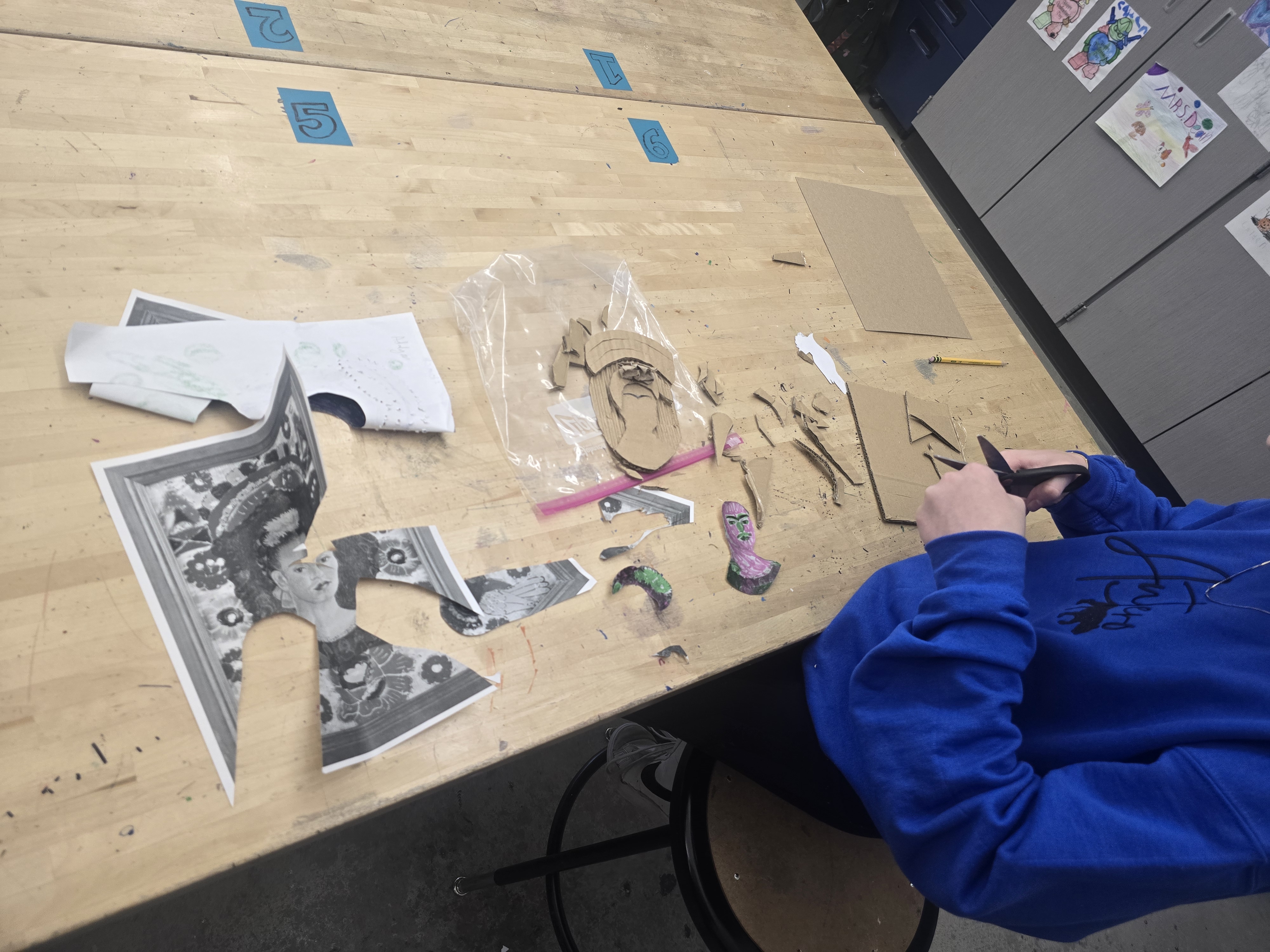
For the Artist-Inspired: 2D to 3D Cardboard Relief lesson, my goal was to balance creative freedom with structured guidance, ensuring students could engage deeply with both art history and hands-on creation. Understanding the techniques and intentions behind past artists’ work remains essential, as it allows students to explore artistic processes while making personal connections to historical influences. To introduce an element of choice while maintaining efficiency, I had students randomly select an artist and artwork from a hat. This method created excitement and curiosity while preventing students from spending excessive time on who they were going to be inspired by.
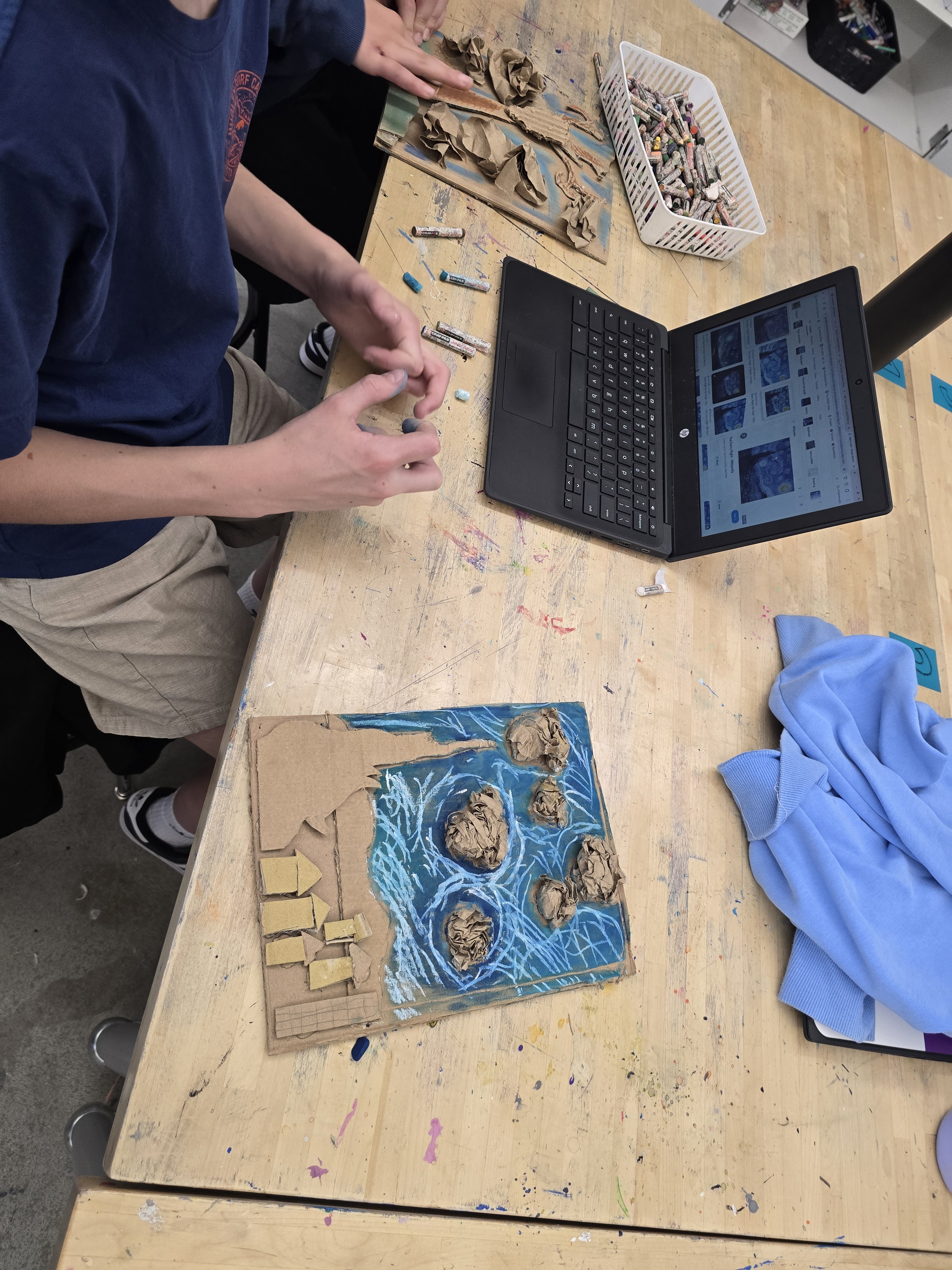
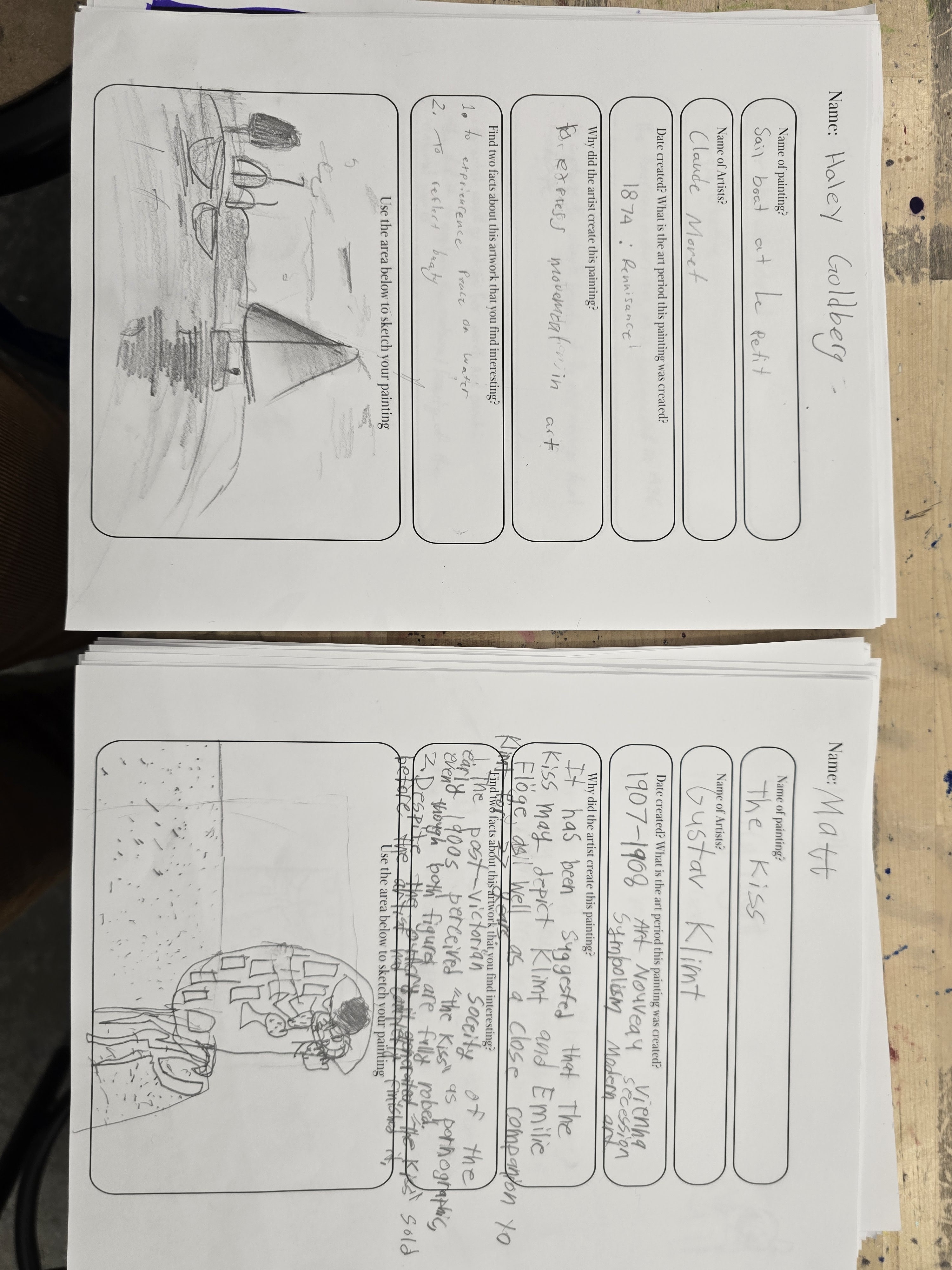
To assess student understanding, students were required to research their assigned artist and artwork before beginning their relief piece. This provided an opportunity for informal assessment through one-on-one conversations and check-ins, allowing me to gauge comprehension and clarify misunderstandings early in the process. As students transitioned into their hands-on work, I provided targeted feedback, guiding them in applying the artist’s techniques to their own compositions. The combination of historical research and hands-on experimentation helped reinforce both contextual knowledge and technical skill development.
This lesson aligns with Colorado Teacher Quality Standard Three, Element B, as I utilized both formal and informal assessment strategies to guide instruction. By integrating research, discussions, and ongoing feedback, I ensured that students had multiple opportunities to demonstrate understanding and refine their work. These assessments directly informed my instructional decisions, allowing me to tailor support based on student needs and enhance learning outcomes.
This lesson supports Grade-Level Expectation VA.6.2.1 (Experimentation, practice, and persistence are required to develop mastery when creating art). Through the process of studying an artist, planning their relief composition, and executing their design, students engaged in artistic experimentation while applying new techniques. This structured yet exploratory approach encouraged them to persist through challenges and refine their skills in both conceptual thinking and hands-on craftsmanship.
Reflecting on this lesson, I recognize the importance of scaffolding student research while providing room for creative interpretation. Moving forward, I will continue refining this balance by enhancing structured checkpoints and peer collaboration, ensuring students feel both supported and empowered in their artistic exploration.



 Brittany Ruland // Artist & Educator