
TSQ II Element B
Teachers establish a safe, inclusive and respectful learning environment for a diverse population of students.
Teachers demonstrate an awareness of, a commitment to, and a respect for multiple aspects of diversity, while working toward common goals as a community of learners.
Designing for Change Proposals
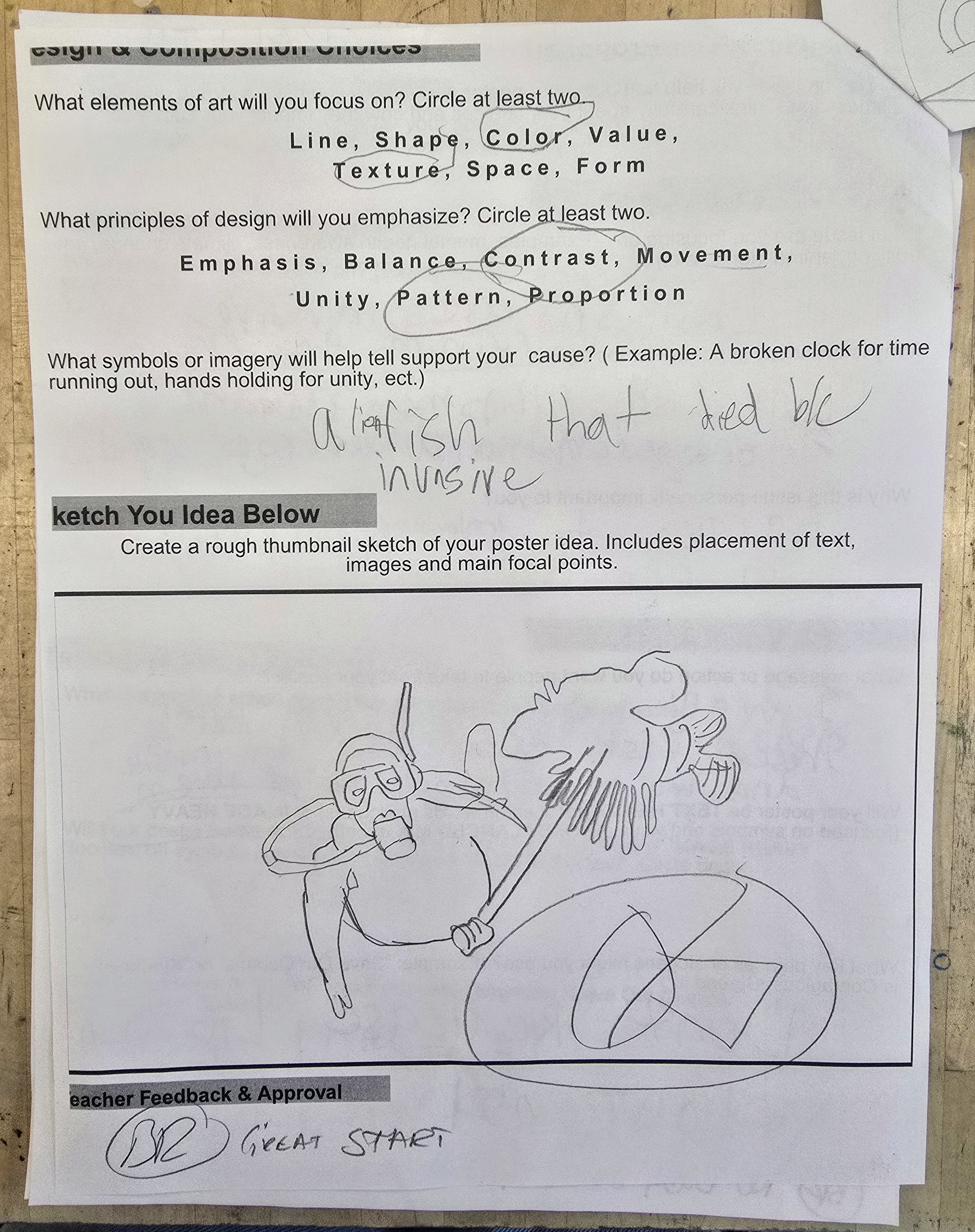
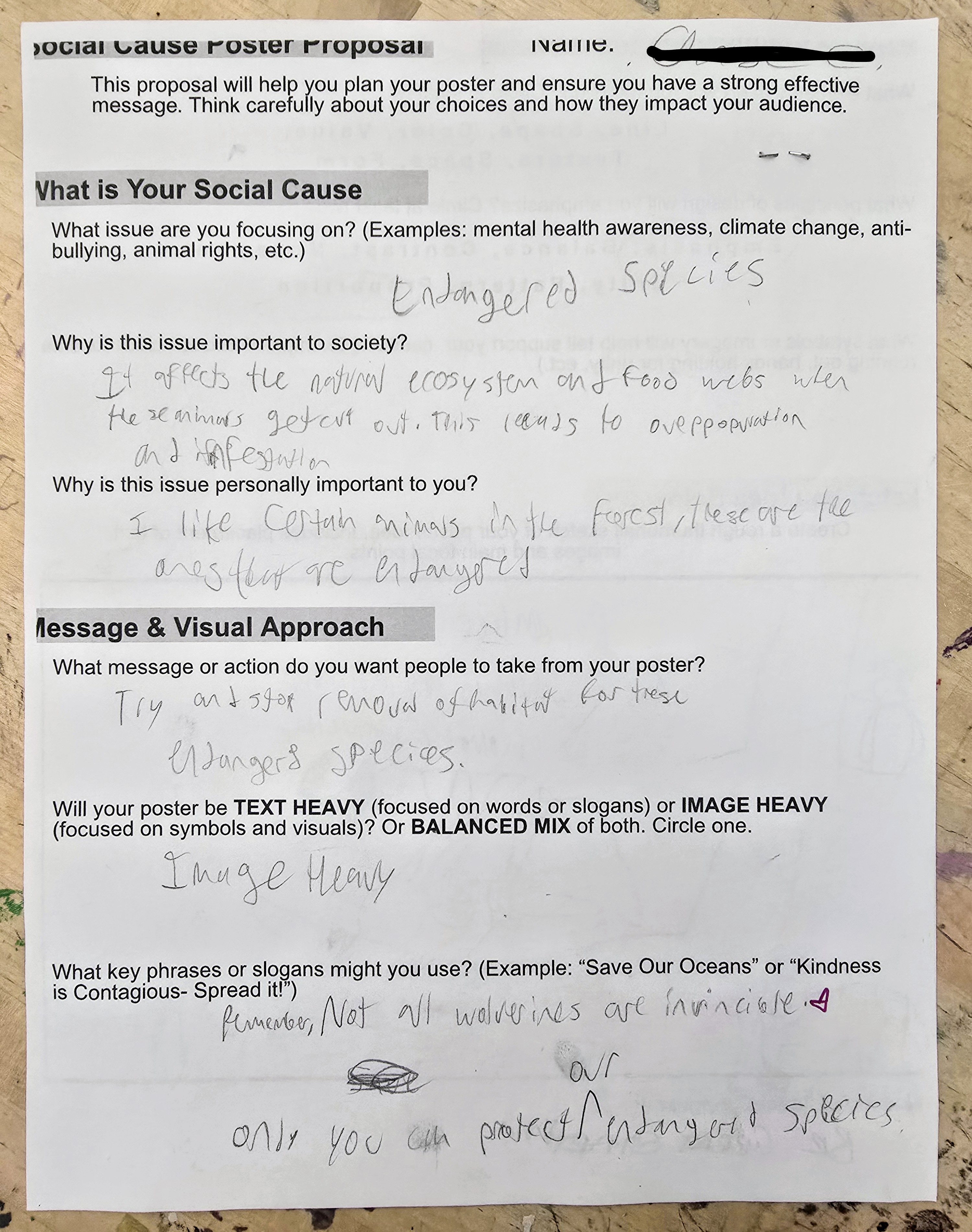
One of the strengths of this lesson was the small class size of 10 students, which allowed for individualized support and meaningful discussions. During student-teacher meetings, I was able to guide students in refining their visual messaging, challenge them to think critically about their design choices, and ensure that their social causes were represented in a way that was impactful and appropriate. This level of interaction fostered an environment where students felt comfortable expressing their ideas while learning how to communicate visually in a respectful and responsible way.
This lesson aligns with Colorado Teacher Quality Standard Two, Element B, as I created a safe, inclusive, and respectful learning environment where students could explore complex social issues through artistic expression. By requiring students to meet with me before beginning their final posters, I ensured that each project was thoughtful, well-researched, and considerate of diverse perspectives. The individualized review process encouraged open dialogue, allowing students to reflect on the impact of their messages while respecting the experiences of others.
Additionally, this lesson supports Grade-Level Expectation VA.7.1.3 (EO (A) Incorporate key concepts, issues and themes from other disciplines into works of art. (C.) Explain how skills, themes and key concepts from other disciplines help artists improve their work). Through this project, students developed an understanding of how design can influence public perception, provoke thought, and inspire action. By carefully considering their message and artistic choices, they engaged in visual storytelling that extended beyond the classroom, connecting art and activism in meaningful ways.
Reflecting on this experience, I recognize the importance of balancing creative freedom with responsibility when addressing social topics in the art classroom. Moving forward, I will continue to provide structured guidance while empowering students to use their voices through art, ensuring they feel supported, challenged, and heard in their creative journeys.




 Brittany Ruland // Artist & Educator