
TSQ I Element A
Teachers demonstrate mastery of and pedagogical expertise in the content they teach. The elementary teacher is an expert in literacy and mathematics and is knowledgeable in all other content that he or she teaches (e.g., science, social studies, arts, physical education, or world languages). The secondary teacher has knowledge of literacy and mathematics and is an expert in his or her content endorsement area(s).
Teachers provide instruction that is aligned with the Colorado Academic Standards and their district’s organized plan of instruction.
Pop Culture Prints Critiques
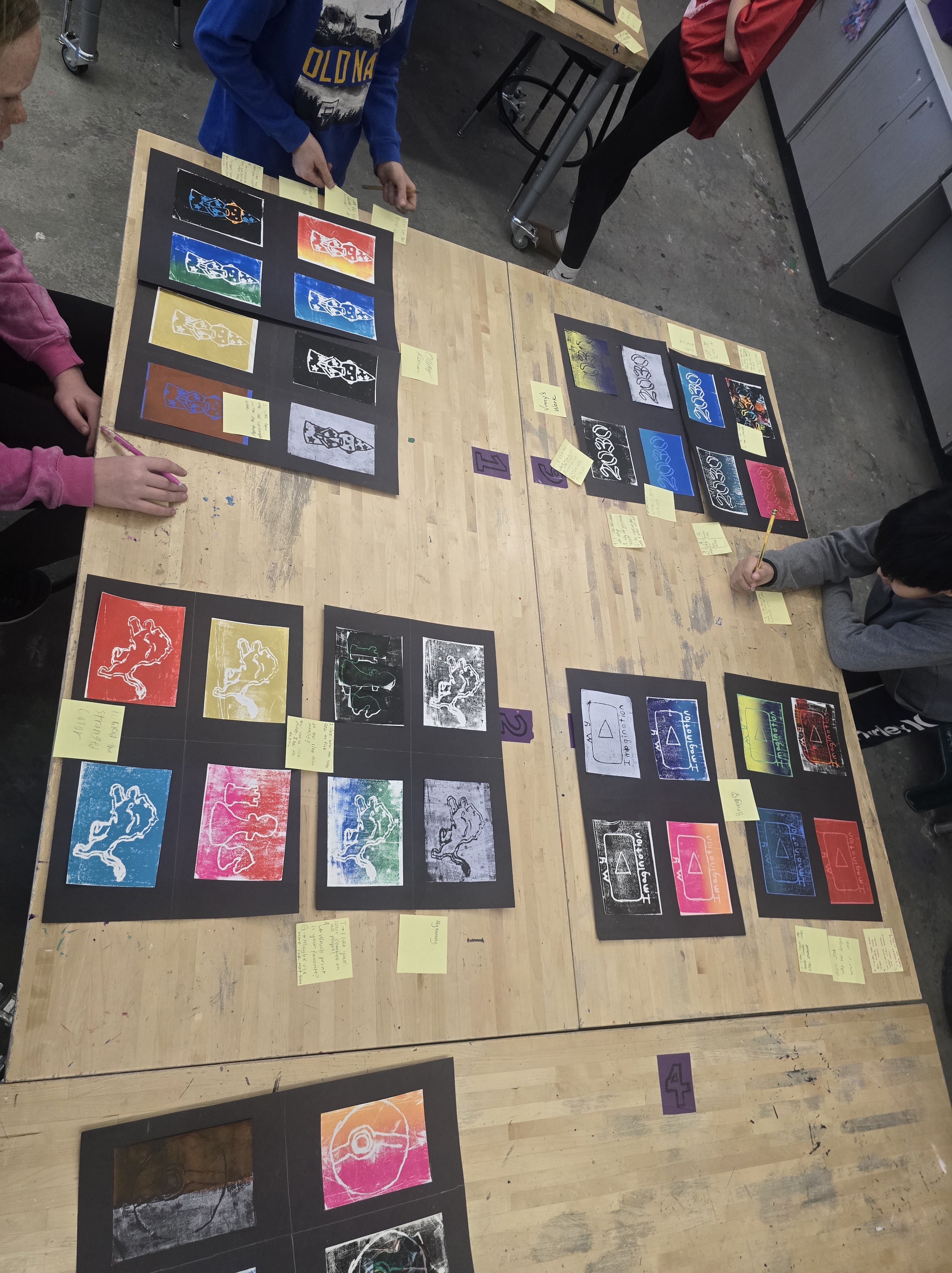
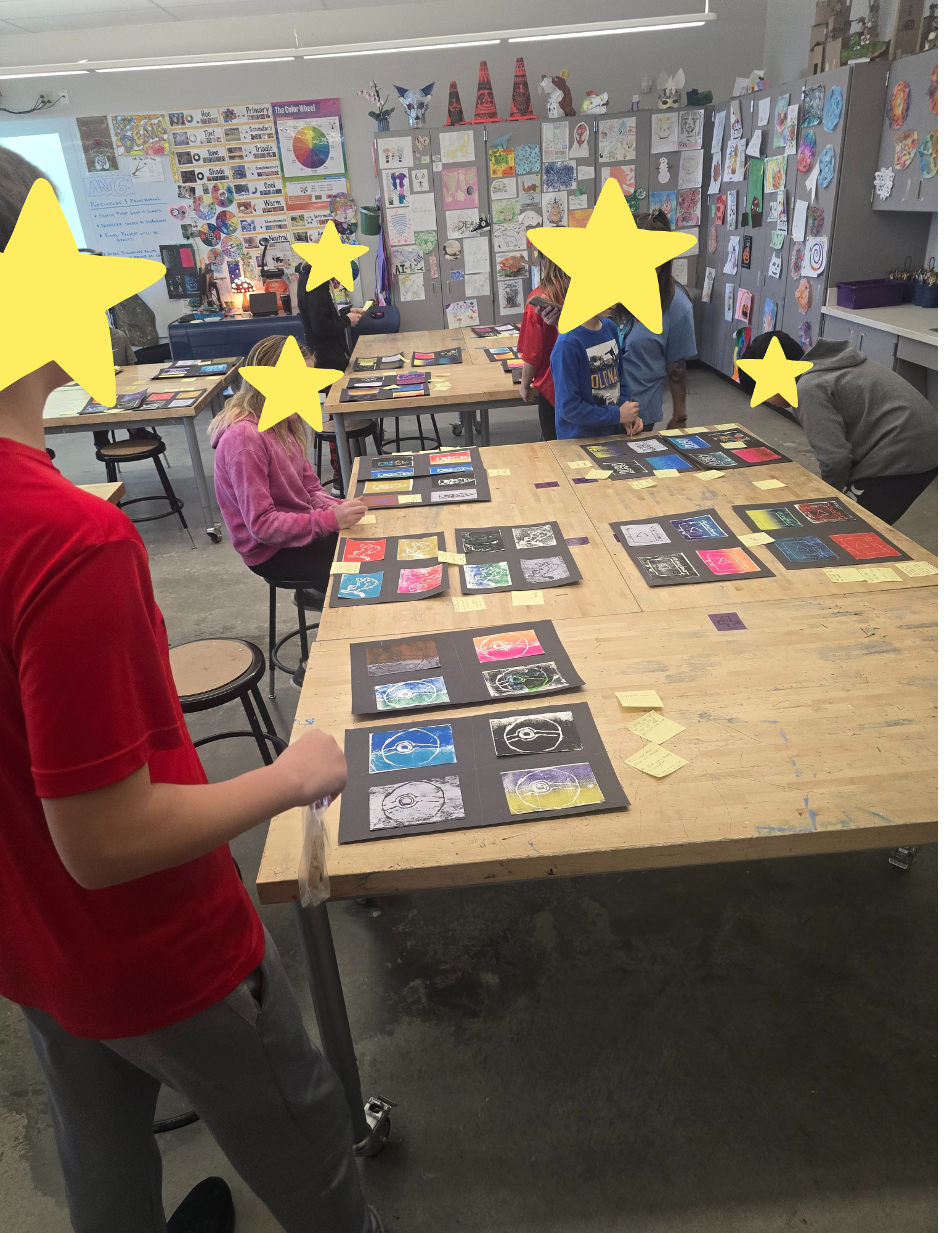
After students completed mounting their final prints, we dedicated a class period to learning how to reflect on and critique each other’s work. Since this was their first formal critique, I introduced its purpose and emphasized the importance of respectful, constructive feedback. I reassured students that while receiving suggestions is valuable, they have the agency to decide which feedback to incorporate—an essential skill in artistic growth.
To structure the critique, I introduced the T.A.G. method using sticky notes: TELL the artist something you liked, ASK the artist a question, and GIVE the artist a suggestion. This approach, aligned with Colorado’s Grade-Level Expectation VA.6.2.2; Engage in constructive critique and self-reflection. This encouraged students to analyze and interpret each other’s work thoughtfully. Seeing their peers’ artwork displayed together fostered a deeper sense of artistic community, and many students provided insightful comments.
This lesson reflects Colorado TQS I Element A, as it demonstrated pedagogical expertise in visual arts by structuring a critique that was aligned with Colorado Academic Standards. The critique process allowed students to engage in thoughtful discussions about artistic intent while reinforcing key concepts in art analysis and interpretation. By providing a structured method for critique, this ensured that students were developing both artistic literacy and critical thinking skills, which are essential components of the visual arts curriculum.
Upon reflection, I recognize that adding a guided discussion about the meaning behind their pop culture references—either before or after the critique—would strengthen their ability to articulate artistic intent (VA.6.1.1: Communicate an idea visually and verbally). Moving forward, I plan to refine the critique process by setting parameters, such as limiting the number of sticky notes per artwork, to ensure balanced feedback. My goal is to develop a critique structure that fosters engagement, critical thinking, and meaningful artistic reflection, reinforcing the connection between art-making and interpretation.
 Brittany Ruland // Artist & Educator